
Since four decades, Riyaz Ahmad Khan, a renowned master artist of Kashmiri paper mache, has been shaping and imbuing the recycled paper pulp with the brilliance of his dexterous brushwork, bohemian colour combinations, and eclectic motifs and patterns. Soaked in the glory of its heritage and folklore, the master artist’s craft illustrates the ever-changing seasonal landscapes of the valley, which is popularly referred to as the “Heaven on Earth”. Discover the art, the artist, and the story behind every exquisite creation in this exclusive Vibezeen feature.
With every changing season in Kashmir, the iconic Chinar trees adorn a new canopy of colours. The bursting vibrant green leaves in spring begin to deepen into rich shades in the summer. With the advent of autumn from September through November, the picturesque Chinars transform into a spectacular tapestry, glowing with fiery hues of honey-yellow, crimson, blood red and orange. This living legacy is symbolic of the shifting colour splashes in nature brought about by the dramatic periodic transformations in the valley.
A Master Craftsman of Amazing Intricacy & Bohemian Colour Combinations
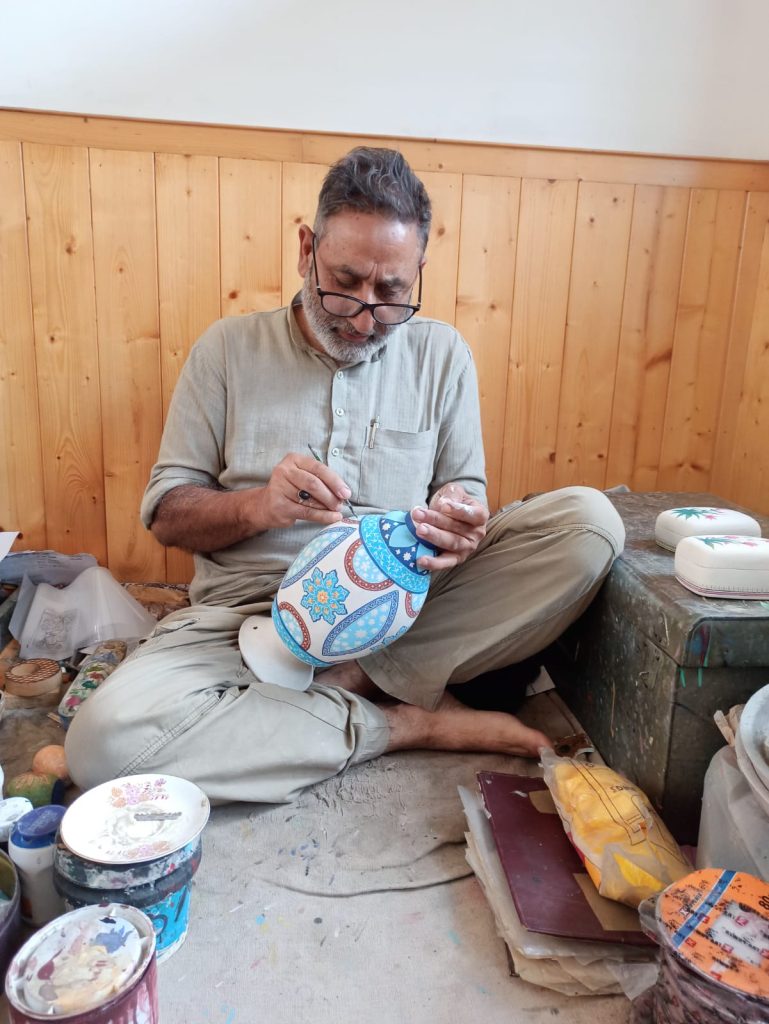
The one handicraft from the region that exemplifies this very splendour of flora and fauna and its rich culture is the traditional art form of Kashmiri paper mache (papier-mâché), also called kar-i-munaqqash, meaning painted work. Since last four decades, Riyaz Ahmad Khan, a renowned master artist of Kashmiri paper mache, has been shaping and imbuing the recycled paper pulp with the brilliance of his deft brushwork, bohemian colour combinations, and eclectic motifs and patterns. Soaked in the glory of its heritage and folklore, Riyaz Ahmad’s dexterous craft illustrates the perpetually-evolving landscapes of the valley and its majestic history. With every changing season, he adorns his paper mache art pieces with blooming hues and patterns blossoming in nature.
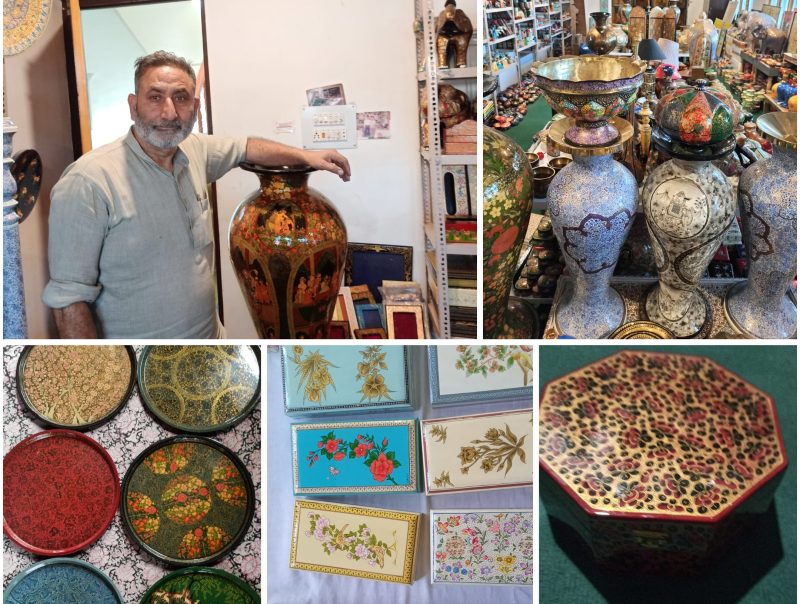
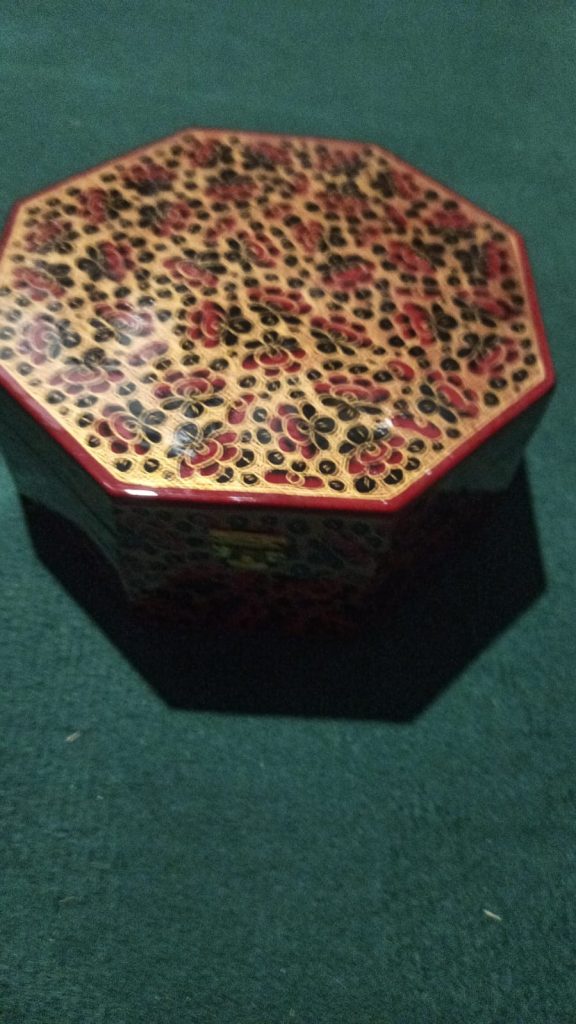
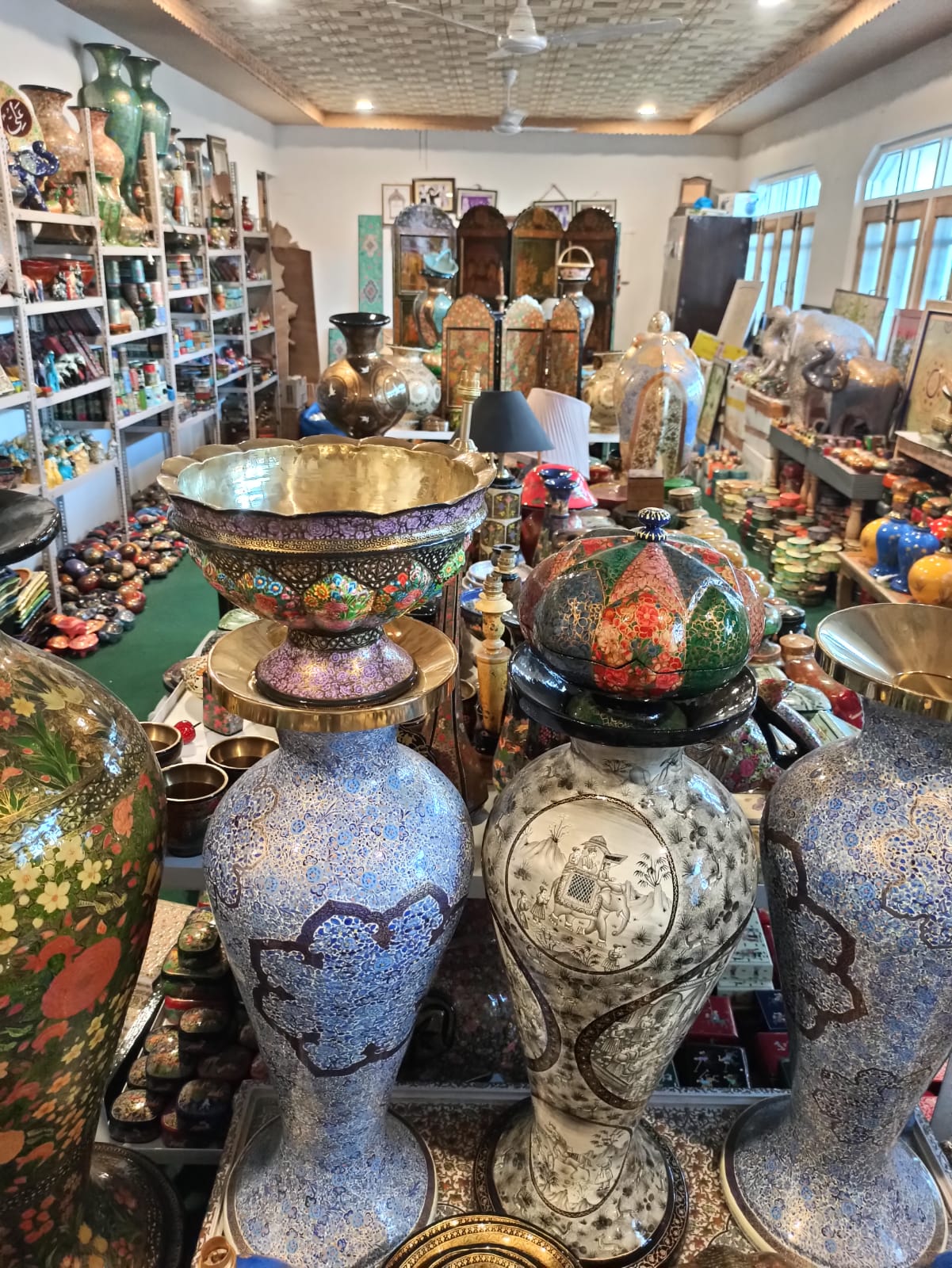
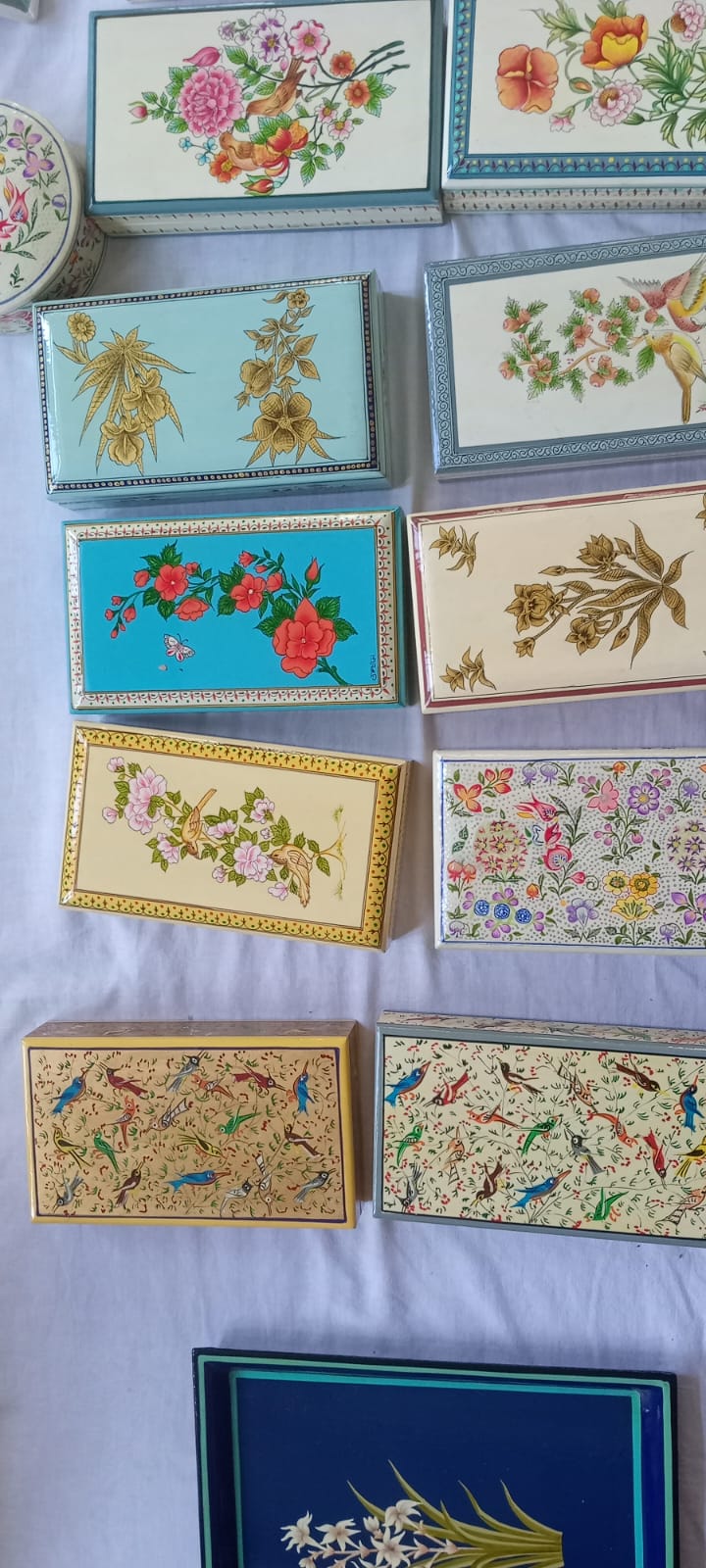
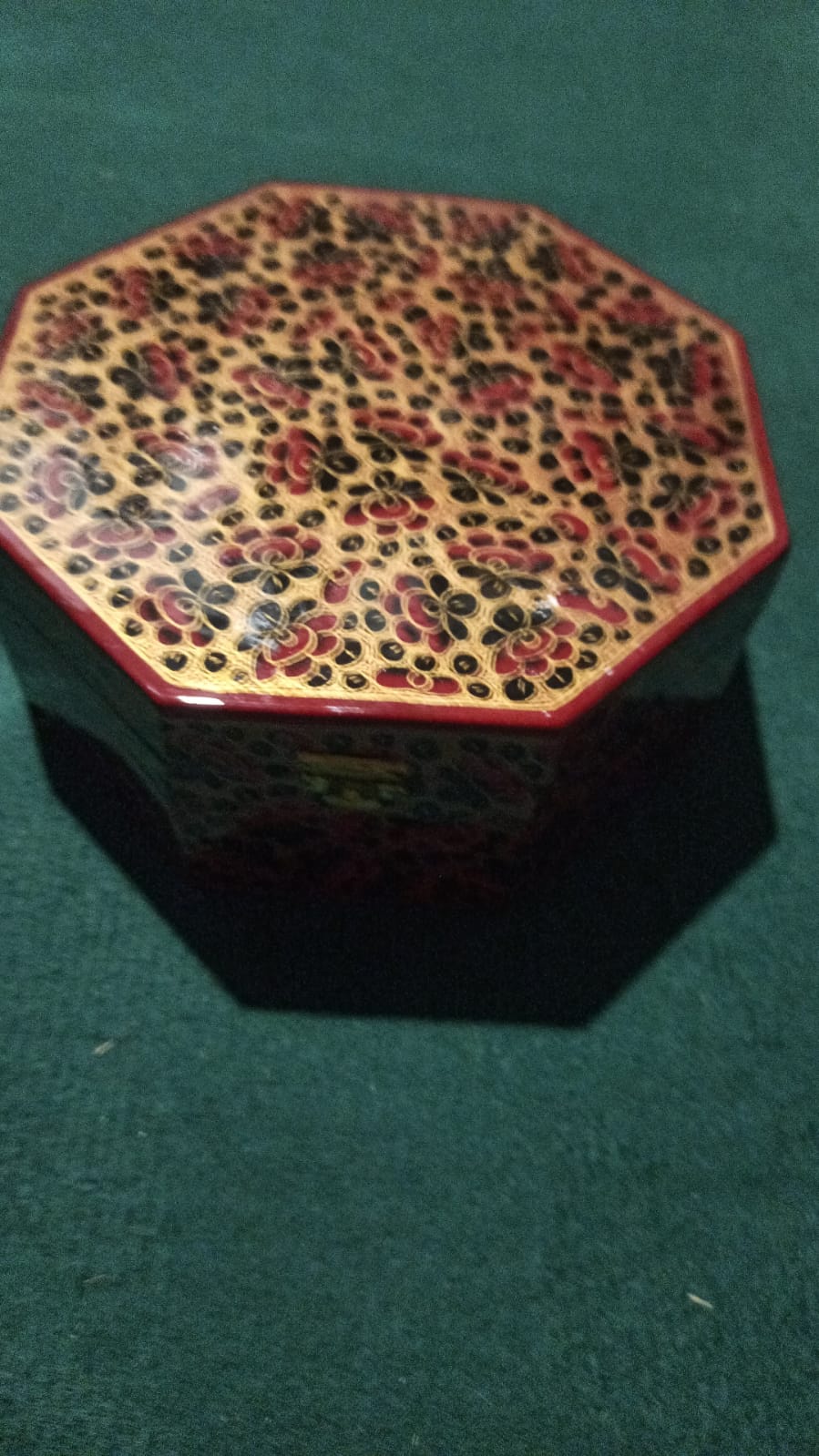
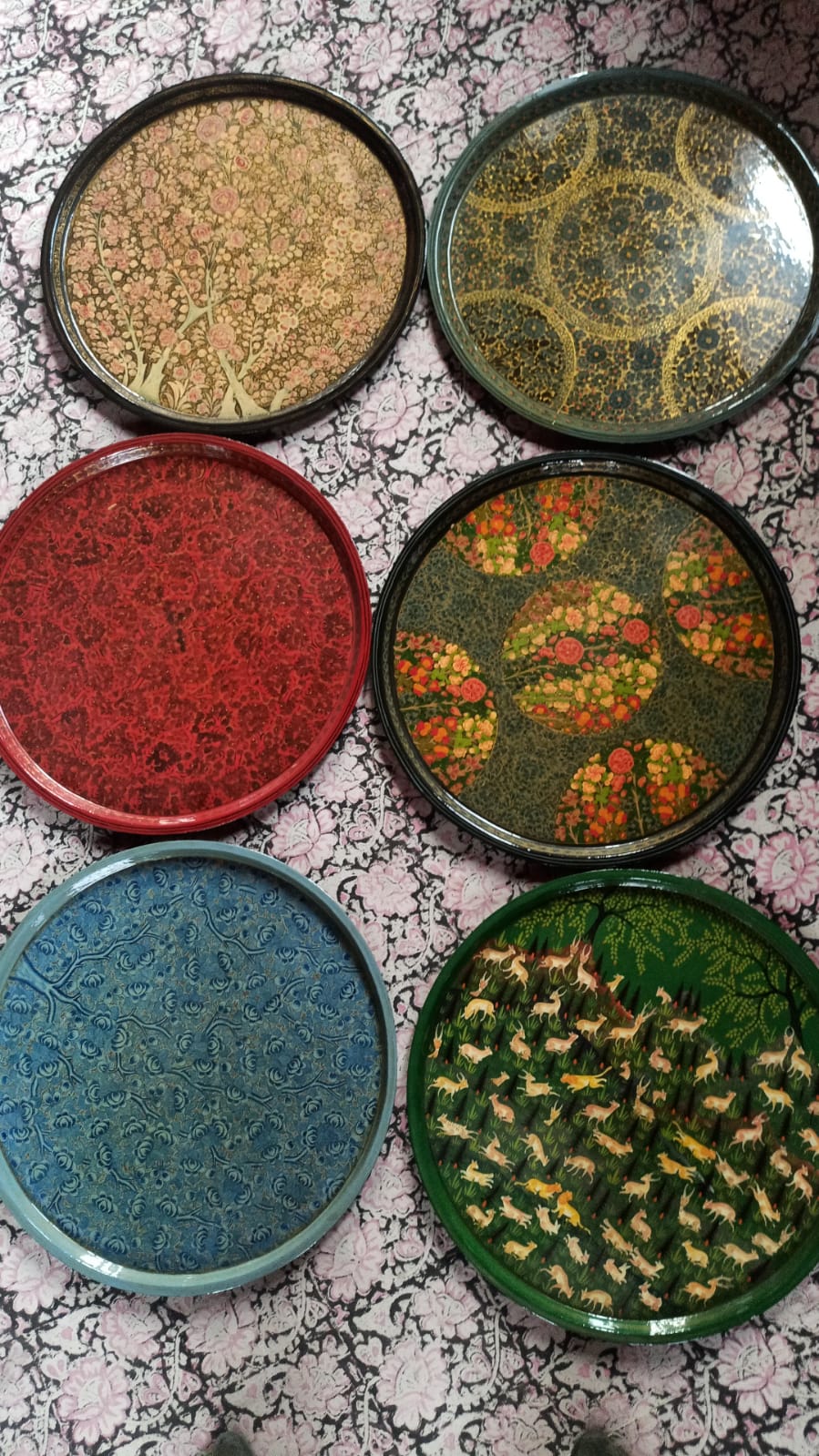
From the turquoise-azure skies, cascading rivers to emerald green meadows and pine forests; and from whites snow covers to the picturesque lakes dotted with shikaras (traditional wooden Kashmiri boats) and floating gardens… Just as adjectives fall short when describing the breathtaking beauty of the valley so do words of admiration for the master artist’s expertise. His vast collection comprises a host of handcrafted paper mache boxes, vases, bowls, wall hangings, and other decorative items flowering with splendid hues. Some of the select ones also feature gold detailing.
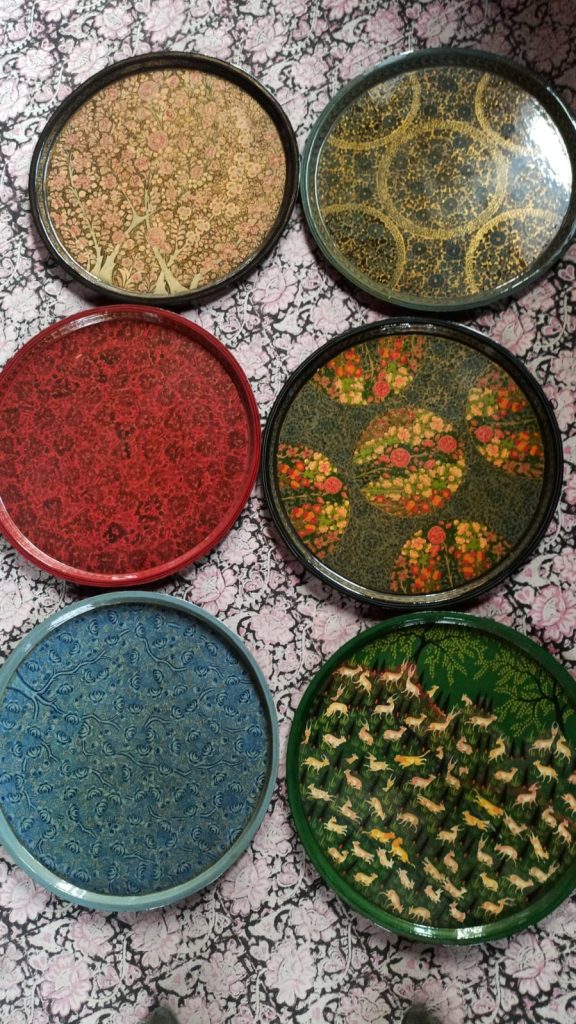
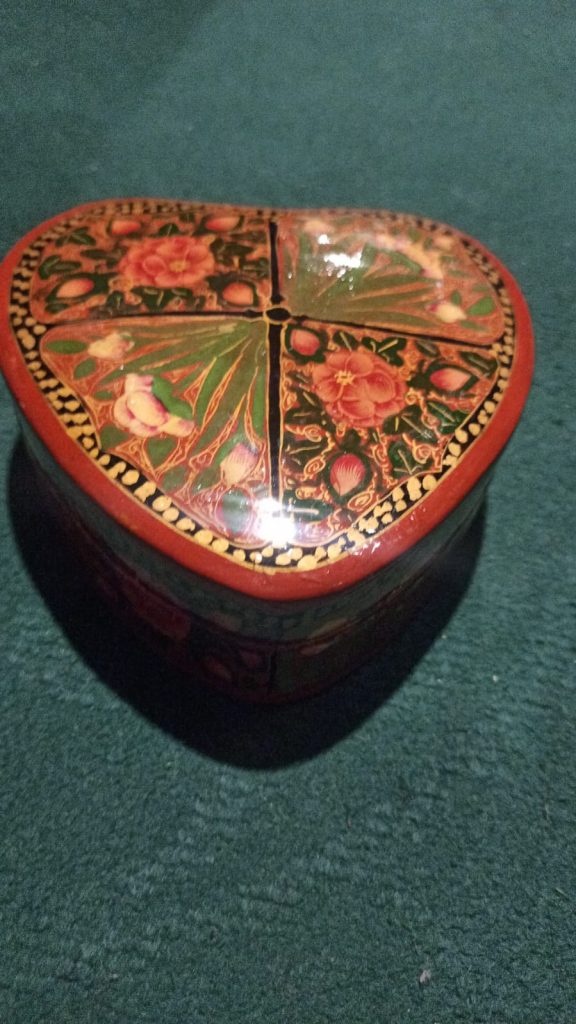
The distinguished master craftsman has been practicing and preserving this centuries-old art form of Kashmir. Holding a Bachelor’s Degree in Commerce, he is wholeheartedly dedicated to his art and has instilled the same values and commitment in his son Ansar Ali Khan. Ansar is a civil engineer by profession but deeply connected to his craftsmanship roots. He practices the art form and promotes their family business through their social media handle on Instagram named Letscraft.1.
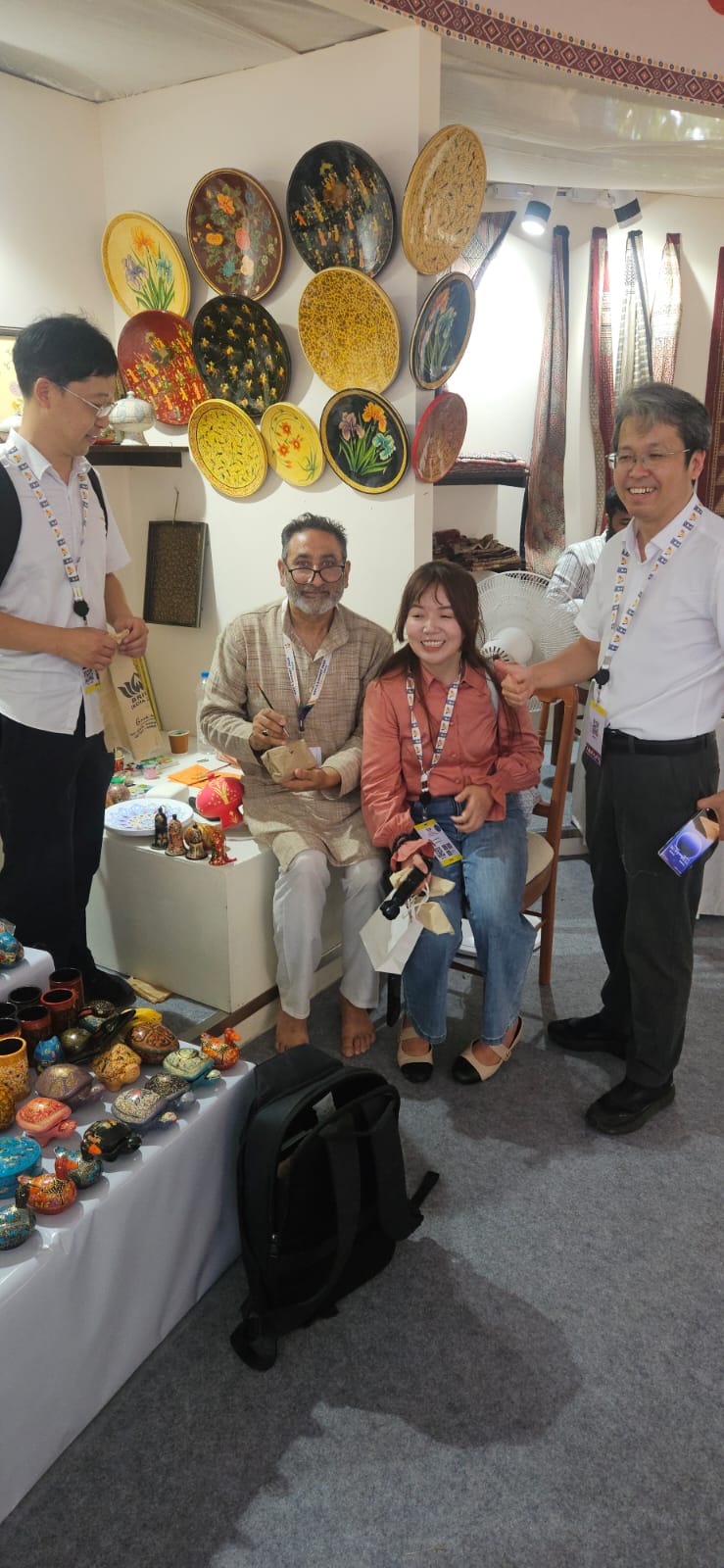
Mr Ahmad has trained hundreds of people and has conducted masterclasses, interactive lectures and live demonstrations at various institutes across India.
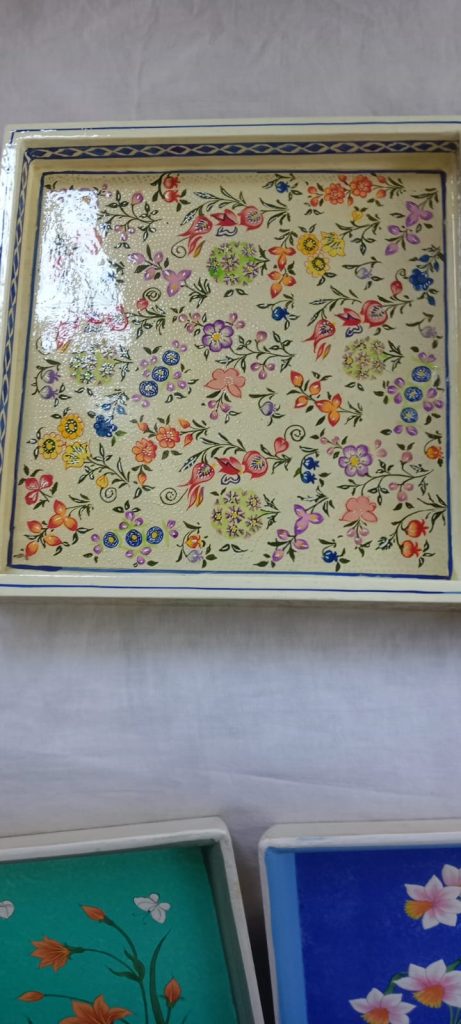
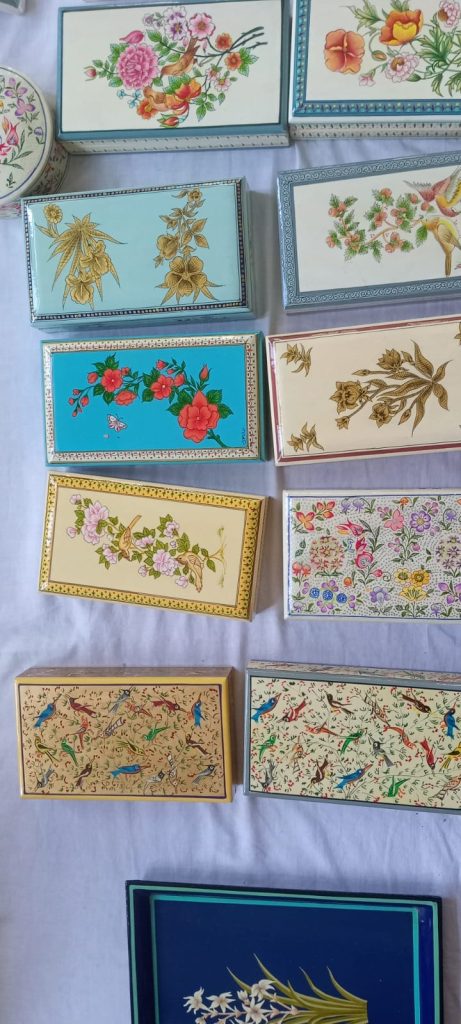
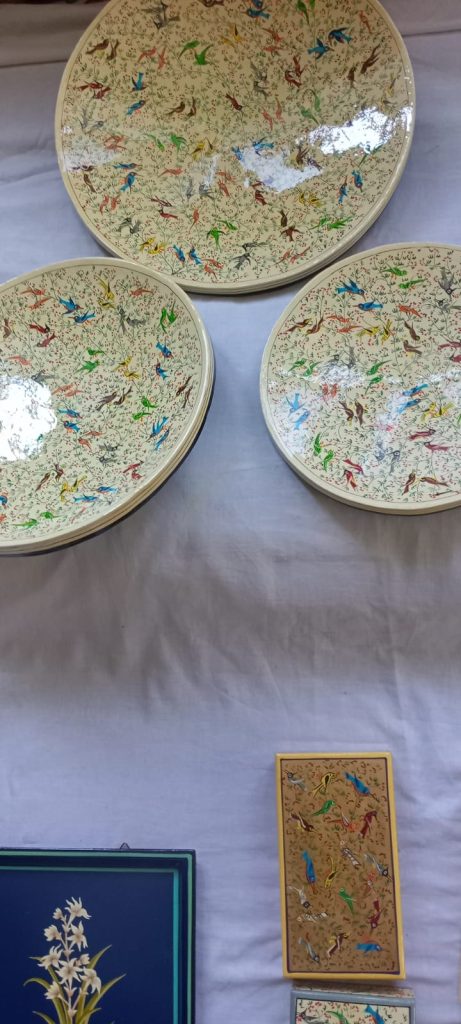
Recipient of several key awards, Riyaz Ahmad was honoured by UNESCO for creating an innovative paper mache dry fruit bowl in 2012. He was also presented the National Award in Paper Mache by the Government of India in 2016. The master artist has participated in major international exhibitions held in Hong Kong, France, Sweden, China and Cuba. He has showcased his art at high-level summits, including G20 and the recently concluded BRICS.
Home is Where the HeArt is!
Riyaz Ahmad’s childhood years were shaped by a way of life steeped in simplicity, closeness to nature, community living, and unhurried moments. “In my early teens, I would keenly observe my paternal uncle practicing the art form along with other craftsmen in the neighbourhood. During late mornings and afternoons, at their home-based workshops, I watched them as they immersed themselves into the art. While they shared togetherness with their friends, they were also completely oblivious to anything beyond their craft. Each artist sat in solitude with their brush and paints.”
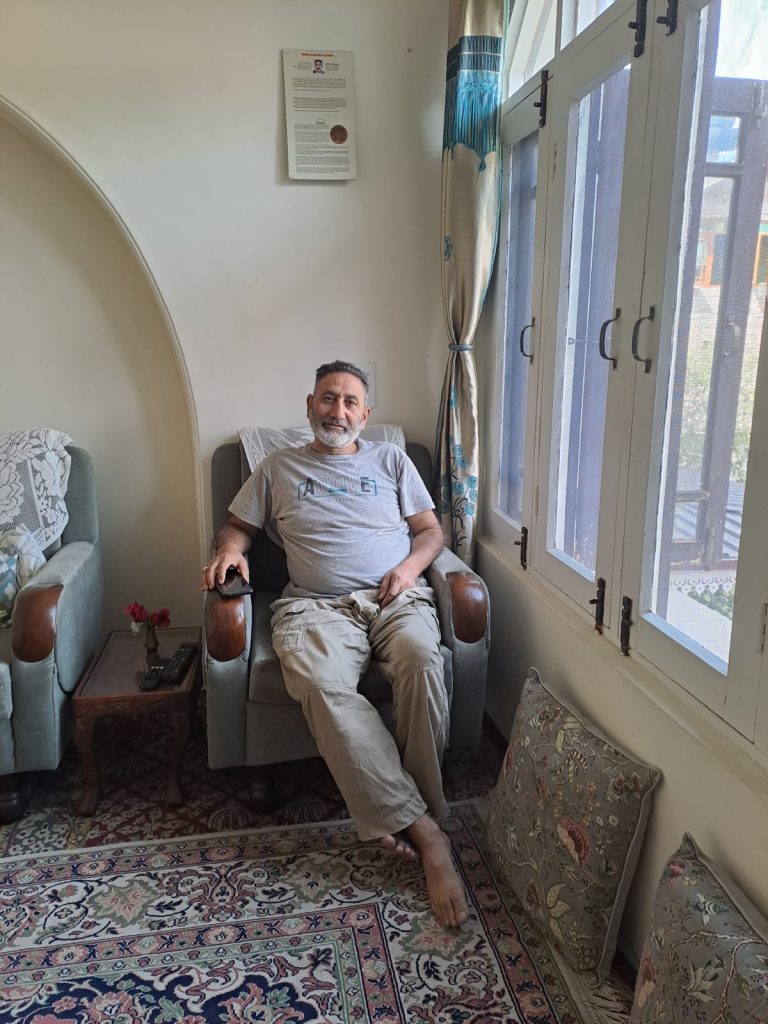
If you sport him in the hustle of any event/summit across India or overseas, you will find him engrossed in painting the motifs of roses, hibiscus and the likes of tulips. However, when he is seated in the familial warmth of his home in Alamgari Bazar area of Zadibal, he is absorbed in the more intricate detailing of Gul-andar-gul (flower within a flower) and Gul-i-Hazara (thousand flowers). “I hold the brush in my hands and everything else is guided by the almighty. When I am painting, all my emotions find expression in the brush strokes,” describes the master artist.
His best moments in the day when he is not painting are the ones post prayers, when he and his family relax over either their noon chai or kahwa.
Kashmiri Paper Mache – An Heirloom of Artistry Introduced by Shah-e-Hamadan
In the 14th Century, a Persian Sufi saint Mir Sayyid Ali Hamadani arrived in the Kashmir Valley from Hamadan (in erstwhile Persia) to preach Sufi teachings. Also revered as “Shah-e-Hamadan,” meaning “King of Hamadan,” he brought along hundreds of scholars and artisans to introduce various crafts, including paper mache. The art was further patronized by Sultan Zain-ul-Abidin in the 15th century, who brought experts from Samarqand.

Exuberance Takes Shape in a Detailed Two-Step Process
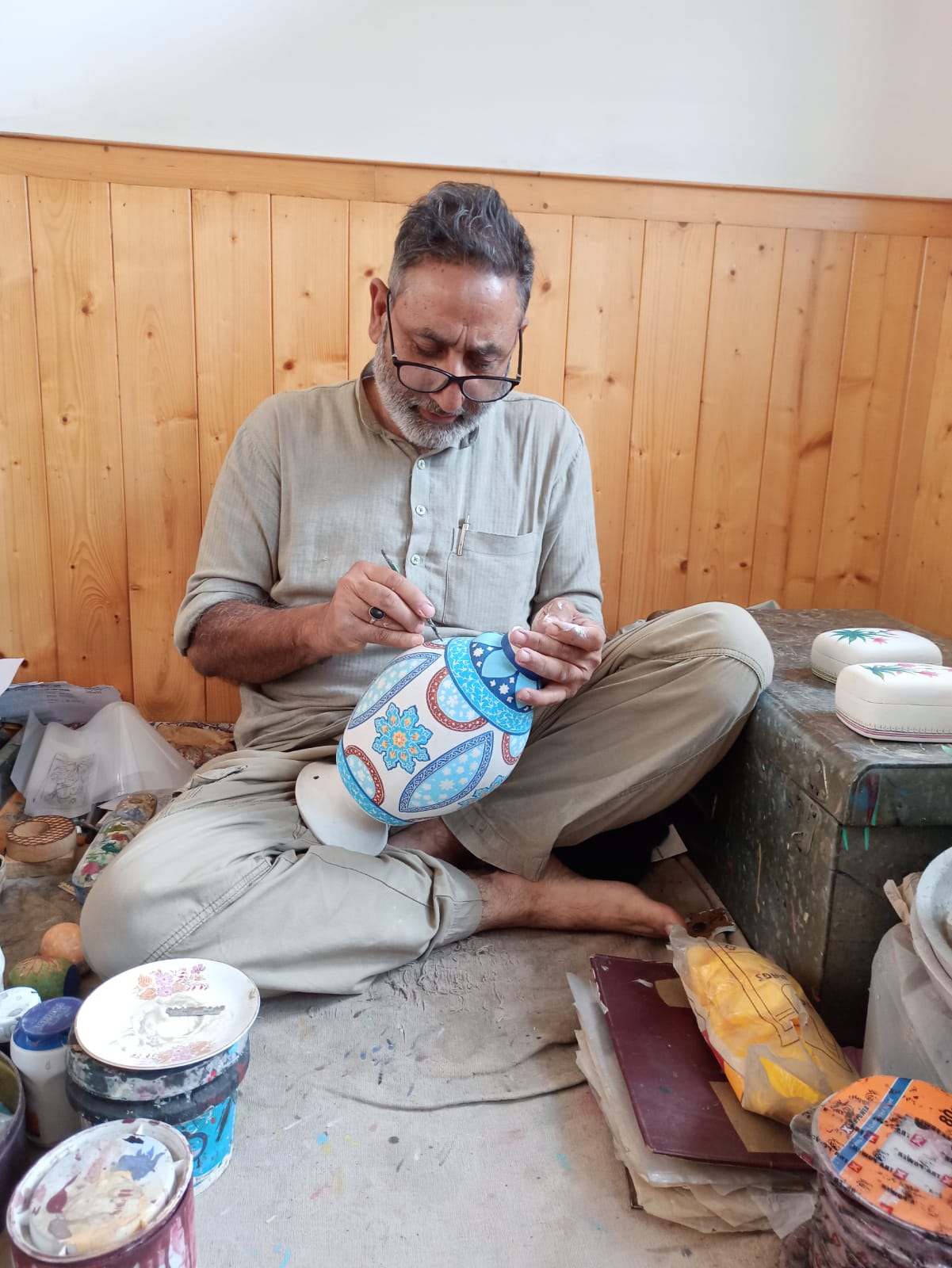
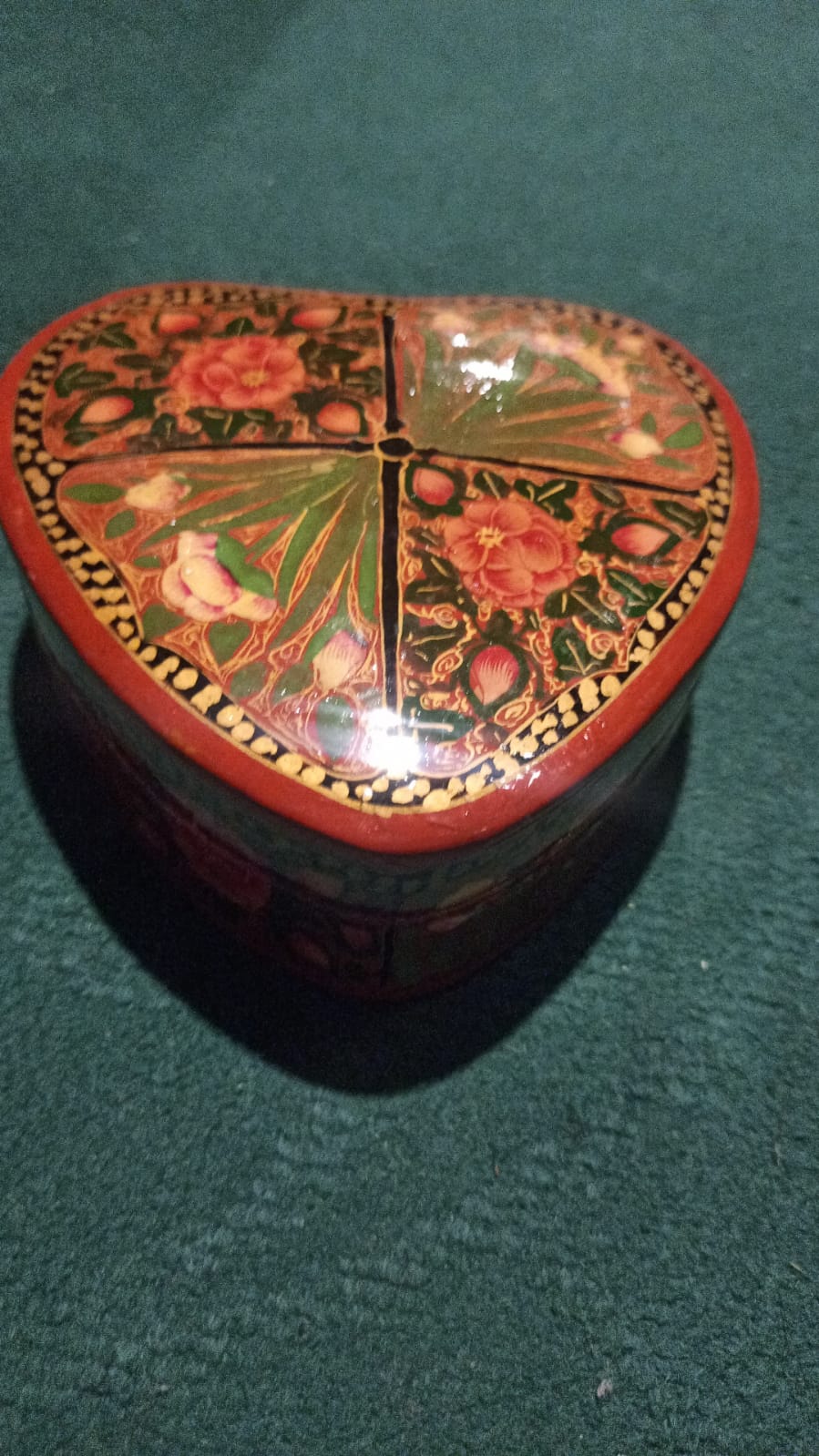
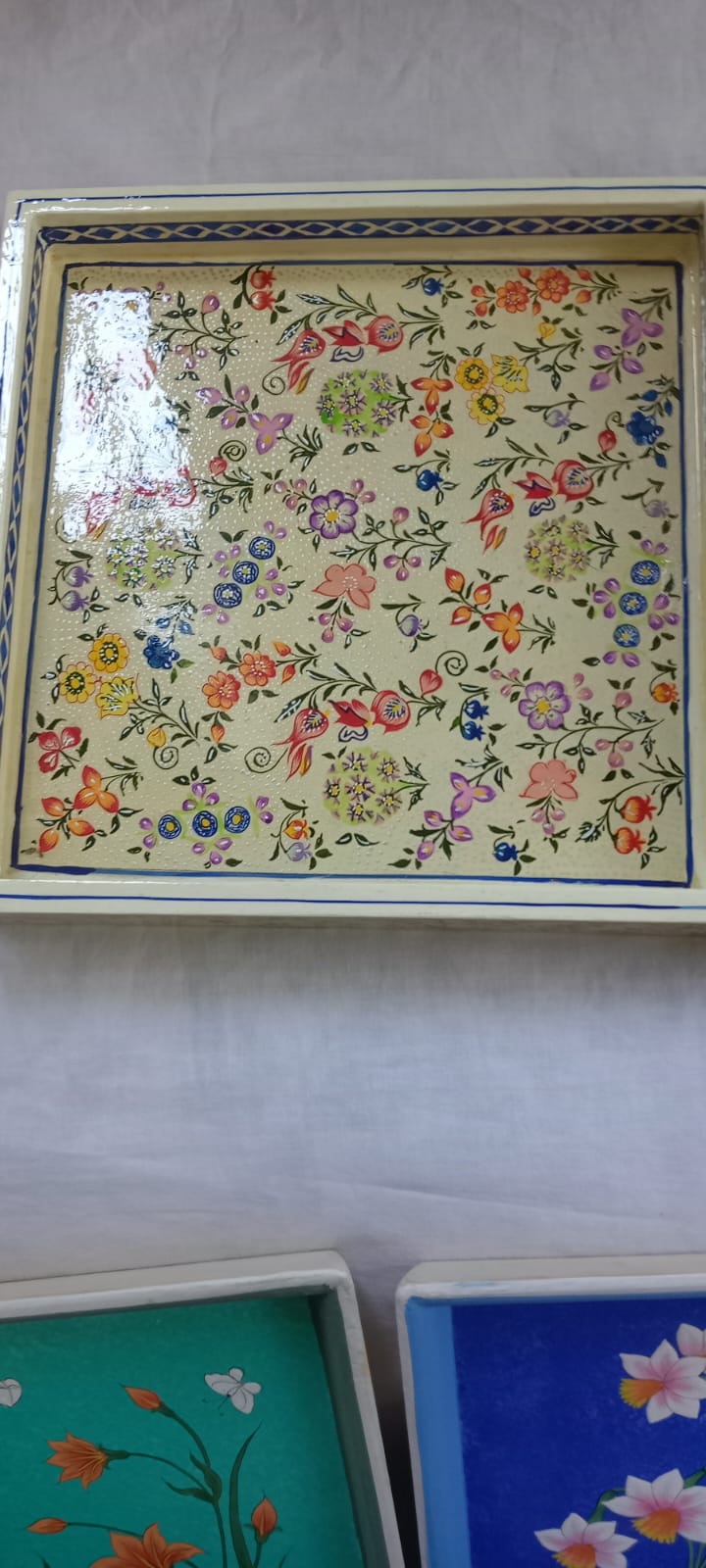
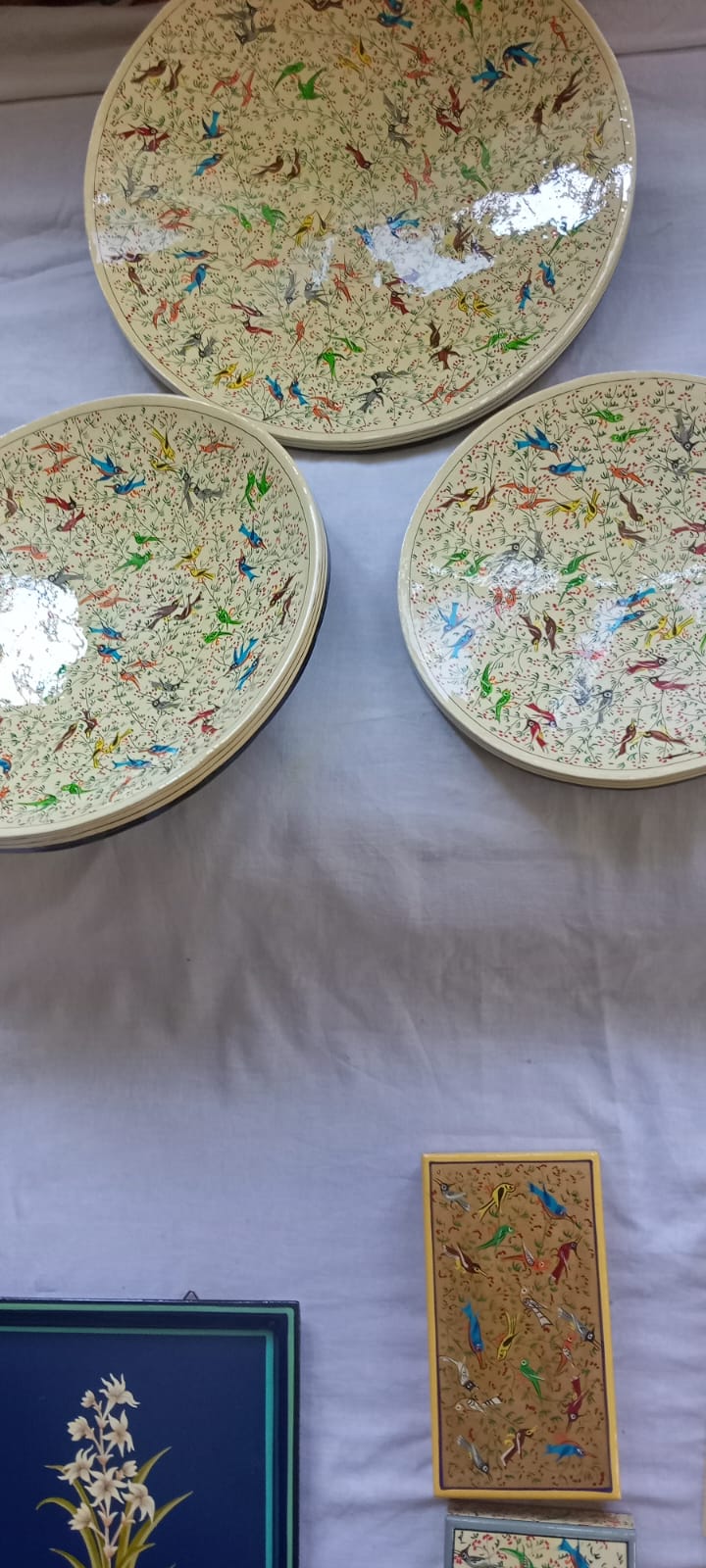
Each paper mache creation goes through two distinct processes: Sakhtsazi (The Structure) and Naqashi (The Painting). In the former process, waste paper, cloth pieces, and straws are soaked in water for days, and then pounded into a fine pulp, mixed with rice-flour glue, and then pressed into molds. Once dried, the shape is set free, leveled and glistened with layers of tissue paper and sandpaper, and primed. In the latter stage, master artists hand paint intricate motifs such as floral, vines, animal, and historical scenes using vegetable and mineral-based colours. Gold accents are added to some select items. The final piece is sealed with multiple coats of shielding lacquer.
Traditional patterns include flowers such as roses, irises, and hyacinths; birds comprising kingfisher, bright green parrots, and pairs of oriental turtle doves; and Persian folklore including legends of Shirin and Farhad and spiritual tales of Sufi mystics. Motifs are also inspired from Kashmiri carpets (kaleen) and shawls (jamavar).
Riyaz Ahmad Khan’s paper mache products are available at local Kashmiri shops and exported to international markets.
Click the social media icon below to contact the artist –