

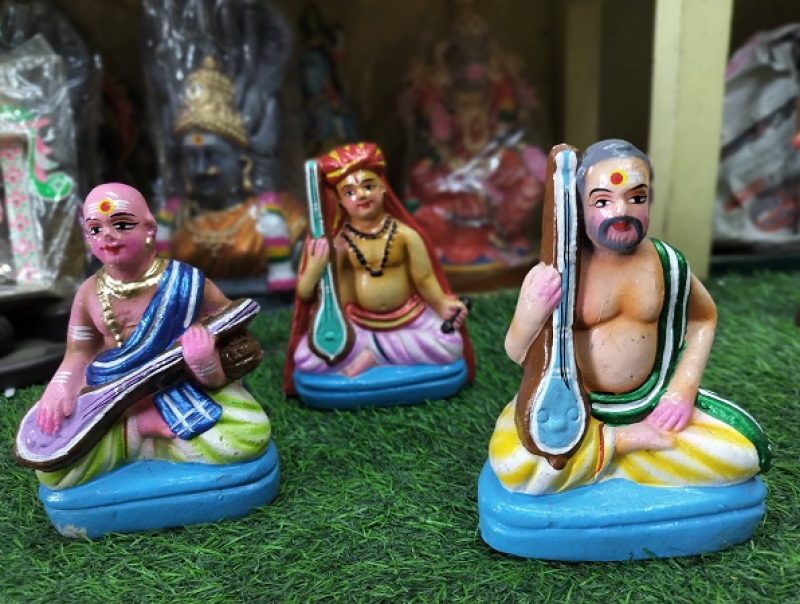
A unique Navaratri tradition in the Southern India hardly makes it to the national headlines unlike the flashier festivities in the western and eastern parts of India. Known as Bommala Koluvu or Bommai Golu or Bombe Habba in the different regions of South India, it is an expression of creativity and devotion through Golu dolls storytelling. It’s a social occasion where families aesthetically display Golu dolls on odd number of tiers in their homes. Families visit each other’s households to view the display and exchange pleasantries. These dolls are handcrafted by skilled artisans using materials such as terracotta, paper mache, and wood.
When the festivities of Navaratri in India take on the centre-stage, the most popular imagery often emerge from the western and eastern regions of the country. The Garba revelry, which originated in Gujarat, has become a pan-Indian social event of nine nights with Bollywood trends fuelling the fashion, dance and music across cities. On the eastern side of the country, Kolkata’s iconic Durga Puja finds itself on the UNESCO Representative List of the Intangible Cultural Heritage of Humanity in December 2021. It is a cultural amalgamation of rituals, traditional crafts, and community involvement.
However, there is one unique tradition in the South India that hardly makes it to the national headlines — the Bommai Kolu. It’s a distinctive ritual that has been passed down from generation to generation. And while it may not be a flashier affair unlike the festivities in the west and east of India, this tradition in the southern regions has been a remarkable way of taking forward stories through the inherited collection of “Golu” dolls in families.
Golu is known by different names in various southern states. It’s called Bommala Koluvu in Telugu-speaking regions, Bommai Golu in Tamil Nadu and Bombe Habba in Kannada. It is also celebrated in parts of Kerala such as Thiruvananthapuram, with significant Tamil influence, and is called Bommai Kolu in the region.
Dating Back to the 14th Century
The tradition originated during 14th century in Vijayanagara kingdom as a way to commemorate the goddess Shakti, the divine feminine. An expression of devotion and creativity through a ritualistic display of dolls, the custom was once patronized by royalty. Princely families displayed figurines in their palaces and gifted what were also known as bride dolls (Marapacchi Bommai) in the wedding trousseau. This basically symbolized the continuity of family values through generations.
Golu Dolls & Storytelling
The Golu doll arrangements depict mythological stories, historical events, and activities in rural life. Each Golu display tells stories ranging from Hindu mythology to everyday life. The dolls are displayed on odd number of tiers (3, 5, 7, 9, or 11). The highest tiers have deities like Goddess Durga, Lakshmi, and Saraswati, representing spiritual security. Lower tiers are for sages, saints, artisans, farmers, and animals, representing interconnectedness of the universe.
Themes vary from mythology to important national events with contemporary twists including sports. Golu is a social occasion where families visit each other’s homes to view the display and exchange pleasantries and gifts. As per the tradition, households add at least one new doll every year, signifying progress and prosperity.
Celebration of Shakti
The divine feminine: Many devotees revere the festival since it pays homage to the feminine energy that symbolizes creativity, nurturing, wisdom and compassion.
Creative Expression by Artisans and Households
From the skilled artists who craft the Golu figurines to setting up the display, Bommai Kolu is an art of sorts. Handmade by skilled artisans, Golu dolls exemplify stories steeped in mythology and folklore passed through generations. Handcrafted with paper mache and clay, each doll is a masterpiece created by traditional artisan families belonging to regions such as Panruti, Vilacheri, Kanchipuram, Thanjavur and Cuddalore in Tamil Nadu and other states.